Ultimately, the question is not simply whether children enter school but whether they remain in the system and acquire the knowledge and skills necessary for life. That is the standard against which Kashmir’s educational progress must be measured.


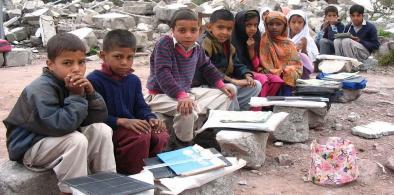
Ultimately, the question is not simply whether children enter school but whether they remain in the system and acquire the knowledge and skills necessary for life. That is the standard against which Kashmir’s educational progress must be measured.
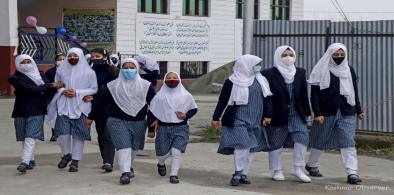
If dummy admissions, prolonged school absenteeism, and an unregulated coaching culture continue unchecked, we may end up producing students who have spent enormous amounts of time and money on education without actually receiving the education they need.
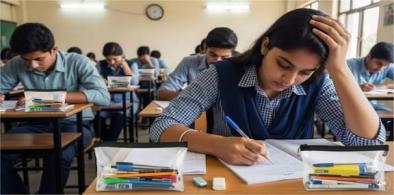
The message is clear. India needs not merely more children entering classrooms, but more children staying, completing and learning. Achieving the ambitions of NEP 2020 and SDG 4 will require sustained public investment, stronger secondary-school retention, better support for vulnerable learners and a sharper focus on completion.

Across Kashmir, the image of crowded reading rooms alongside empty classrooms should compel us to reflect on the direction our education system is taking. Reading rooms may help students prepare for examinations, but schools and colleges prepare them for life.
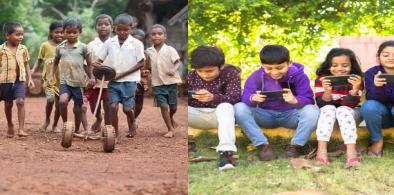
Unfortunately, a growing number of parents appear apprehensive about their children becoming proficient in their mother tongue, believing that greater exposure to local languages may somehow hinder their command of English or other global languages. This perception is both unfortunate and unfounded. A strong foundation in one's mother tongue…
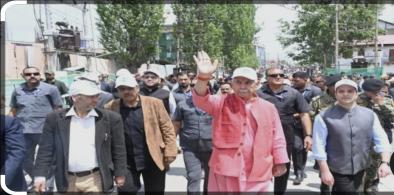
A particularly noteworthy initiative has been the implementation of the Nasha Mukt Bharat Abhiyan (NMBA), the national de-addiction campaign. In Jammu and Kashmir, this national mission has gained remarkable traction. The recently conducted 100-day intensive campaign under NMBA has created widespread awareness and engagement across all…

The biggest victims of heavy snowfall are often invisible in public conversations.They are the daily wage workers. laborers, construction workers, street vendors, load carriers, and small service providers who depend on daily earnings to feed their families.When snow blocks roads and markets shut down, their income stops immediately. There is…
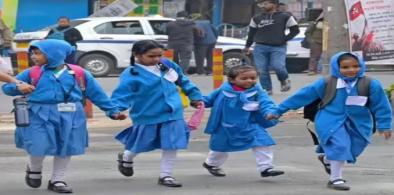
Education must be age-appropriate, climate-sensitive, and child-centred.A child rubbing sleepy eyes in the freezing dawn, dragged toward a coaching centre, is not a symbol of discipline. It is a warning. When homework and early classes steal rest and play, education stops nurturing and starts impacting childhood.lets remember that childhood is…
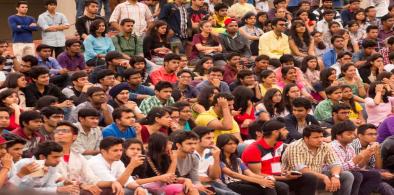
South Asia’s unemployment challenge is unfolding differently across different regional countries, yet driven by almost similar structural failures. India’s scale magnifies the risks of jobless growth; Pakistan’s instability deepens youth disillusionment; Sri Lanka’s educated unemployment reflects long-standing policy neglect; and Bangladesh’s…
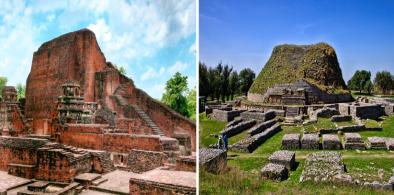
Initiatives under SAARC, though often criticized as politically dormant, have nonetheless sought to promote educational and cultural exchanges in fits and starts. Projects that highlight shared histories and traditions can help build a stronger regional identity and collective progress. Elements of ancient wisdom — such as holistic learning,…